The Quick Answer
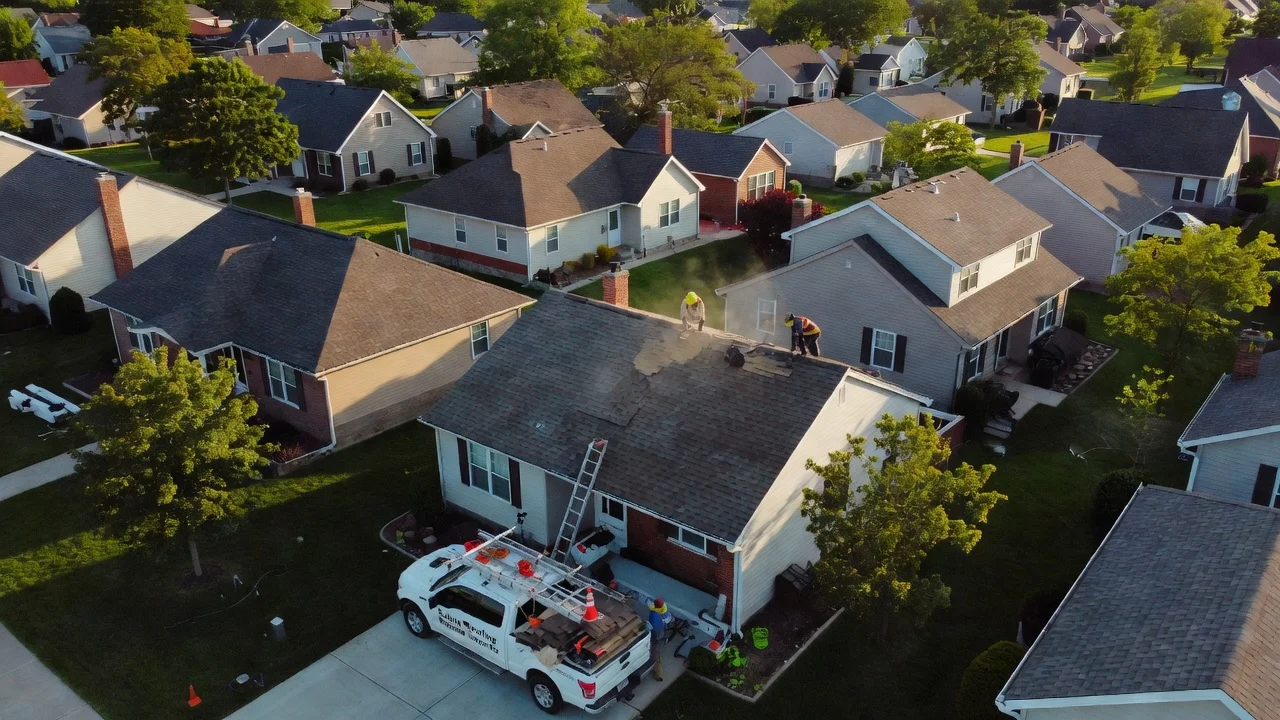
Most roof replacements take one to three days for an average home, from tear-off to final cleanup. Size, roof pitch, material choice, and weather all affect the number. A small house with a simple roof can finish in a single day. Steeper, larger, or storm-damaged roofs may stretch to three or four days.
Wondering how long a roof replacement really takes? You’re not the only one losing sleep over it. Homeowners ask us this question more than almost anything else, and the good news is the answer is pretty simple: most jobs wrap up in one to three days. Let’s walk through what we call the Roof Clock — the real hour-by-hour, day-by-day rhythm of a roofing project — so you know exactly what’s coming before the trucks pull up.
A Realistic Timeline for Most Roof Replacements
Most roof replacements on an average house take one to three days from the first shingle pulled to the last nail driven. Size, roof pitch, material, and weather all nudge that number up or down.
Here’s the thing nobody tells you: the roof replacement timeline isn’t really about how long it takes to nail down shingles. That part moves fast. A skilled crew can shingle a simple roof almost as quick as you’d mow a big yard. The slow parts, if there are any, come from tear-off on a roof with multiple old layers, steep pitches that need extra safety gear, or a roof shape with lots of valleys and chimneys to work around. Think of a plain rectangle roof like a smooth country road, and a roof with dormers, skylights, and odd angles like a windy back road with a dozen turns. Same distance, different amount of time behind the wheel.
So how long does reroofing take in real numbers? A straightforward asphalt shingle job on a typical single-family home usually lands in the one-day-to-two-day range. Add a layer of complexity, like a steep pitch or a full tear-off down to the wood decking, and you’re looking at two to three days. This is why every honest roofer gives you a range instead of a single number — the roofing project process has a few moving parts, but it’s never a mystery once someone walks your roof and gives you real numbers.
How Long Does It Take to Roof a 1500 Sq Ft House or a Small Home?
A 1,500-square-foot house with a simple roof shape and one layer of old shingles is often a one-day job for an experienced crew. Smaller homes, garages, and simple ranch-style roofs can sometimes finish even faster. The bigger the roof and the steeper the pitch, the more that timeline stretches toward two or three days.
Before Installation: Scheduling, Materials, and Prep
The prep work before installation day usually takes longer than the install itself. Between scheduling, ordering materials, and pulling permits, plan on one to a few weeks of lead time before the crew shows up.
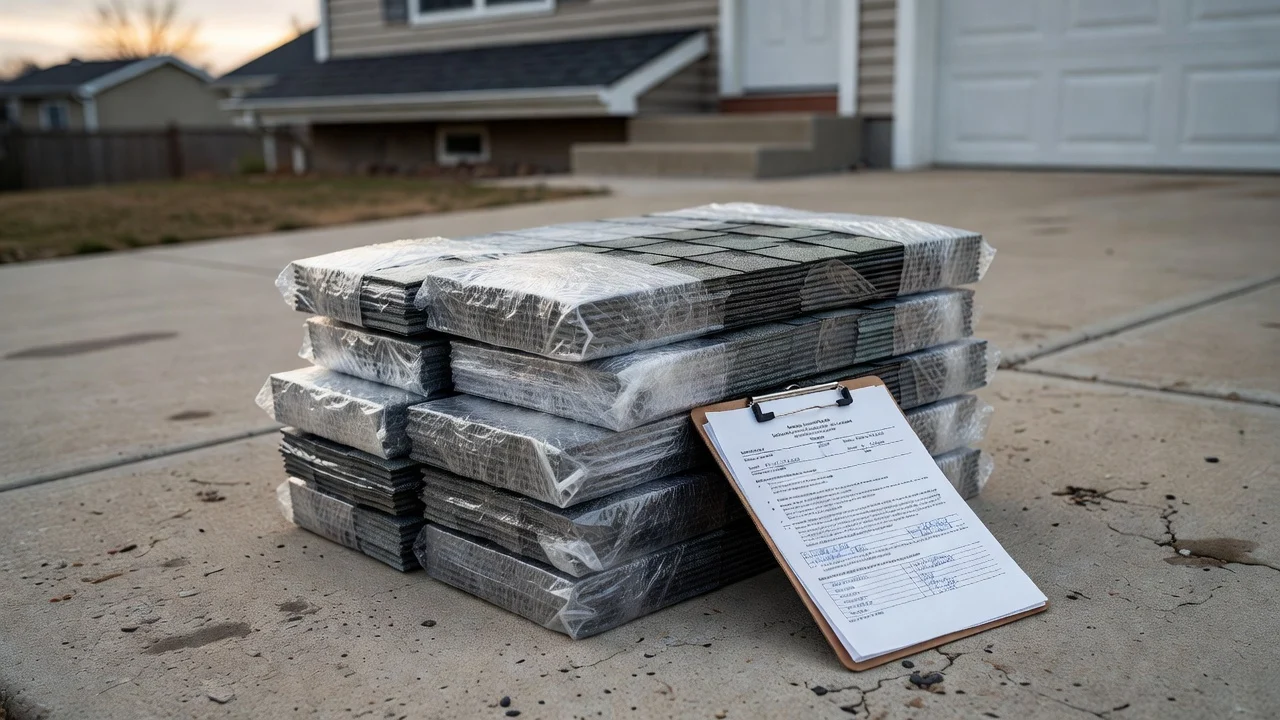
Materials need to be ordered and delivered, which can take anywhere from a few days to a couple of weeks depending on the shingle color and style you pick. Popular colors sometimes sit on back order, kind of like trying to grab the last cart of firewood before a cold snap hits. On the paperwork side, Michigan requires anyone contracting to install or repair residential roofs to hold a Residential Builder’s License or a Maintenance & Alteration Contractor license from the state — not just a basic local business license. You can double-check any contractor’s standing with the Michigan LARA Contractor License Lookup before you sign anything.
If you’re in Saline, the City Building Department requires a building permit and inspection for roof replacement or major repair, even on a single-family home — this isn’t optional paperwork, it’s part of doing the job right. Your contractor should be pulling that permit on your behalf, and you can look up the requirements through the City of Saline Building and Permits portal. It’s also smart to confirm your roofer is certified by the manufacturer of the shingles they’re installing — the GAF Certified Contractor Locator is a fast way to check. If you’re still deciding who to trust with the job in the first place, our guide on who you can really trust for roofing in Southeast Michigan walks through exactly what to look for.
A roof replacement isn't a weeks-long ordeal camped out in your yard — it's usually done and swept clean before the weekend hits.
Installation Day: What Actually Happens Step by Step
Installation day follows a set order: tear-off and disposal, deck inspection, underlayment and ice barrier, then shingles and flashing, finishing with a full site cleanup. It’s a well-rehearsed sequence, not a guessing game.
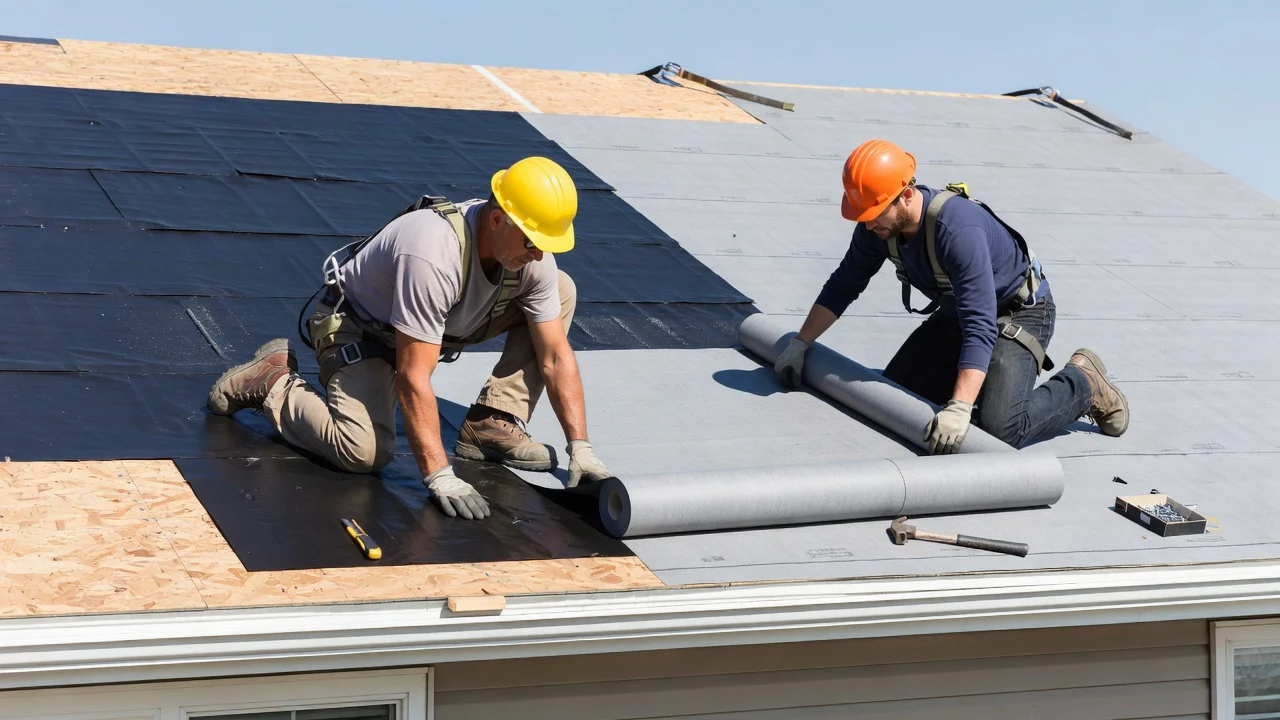
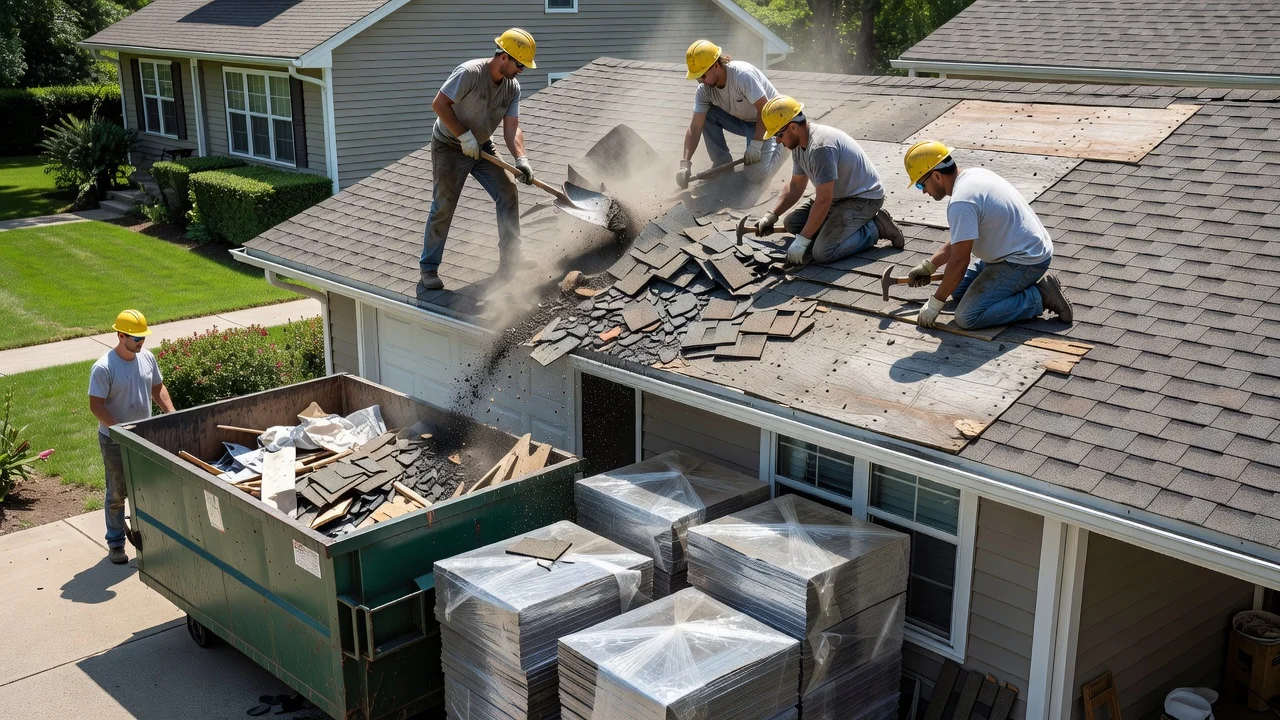
First, the old roofing comes off and gets loaded straight into a dumpster or trailer — no piles sitting in your yard overnight. Next, the crew checks the wood decking underneath for soft spots or rot, since shingles need a solid surface to grip. Then comes underlayment, a protective layer that goes down before the shingles ever touch the roof. In Southeast Michigan, the Michigan Residential Code requires an ice barrier membrane, often called ice and water shield, at the eaves in areas with a history of ice damming — and Saline’s freeze-thaw winters absolutely count. That extra layer is one reason our reroofing timeline includes a step homes in warmer states skip entirely.
After that, it’s shingles, flashing around chimneys and vents, ridge caps, and a final walk of the roof to check every seam. The crew wraps the day by running magnetic sweepers across your yard and driveway to grab stray nails. That’s the whole rhythm, start to finish — no mystery, no missing steps.
Should You Stay Home During the Roof Replacement?
You don’t have to stay home during a roof replacement, and plenty of homeowners run errands or go to work while it happens. It’s noisy, though — think steady hammering and footsteps overhead — so if you work from home or have a light sleeper or a nervous pet, you might plan around that. Someone should be reachable by phone in case the crew has a quick question, but babysitting the job isn’t required.
Common Delays and How Weather Affects Your Timeline
Weather is the number one thing that can push your roof replacement timeline back. Rain, high wind, or extreme heat can pause a job mid-day, and a good crew will always choose safety and quality over rushing through bad conditions.
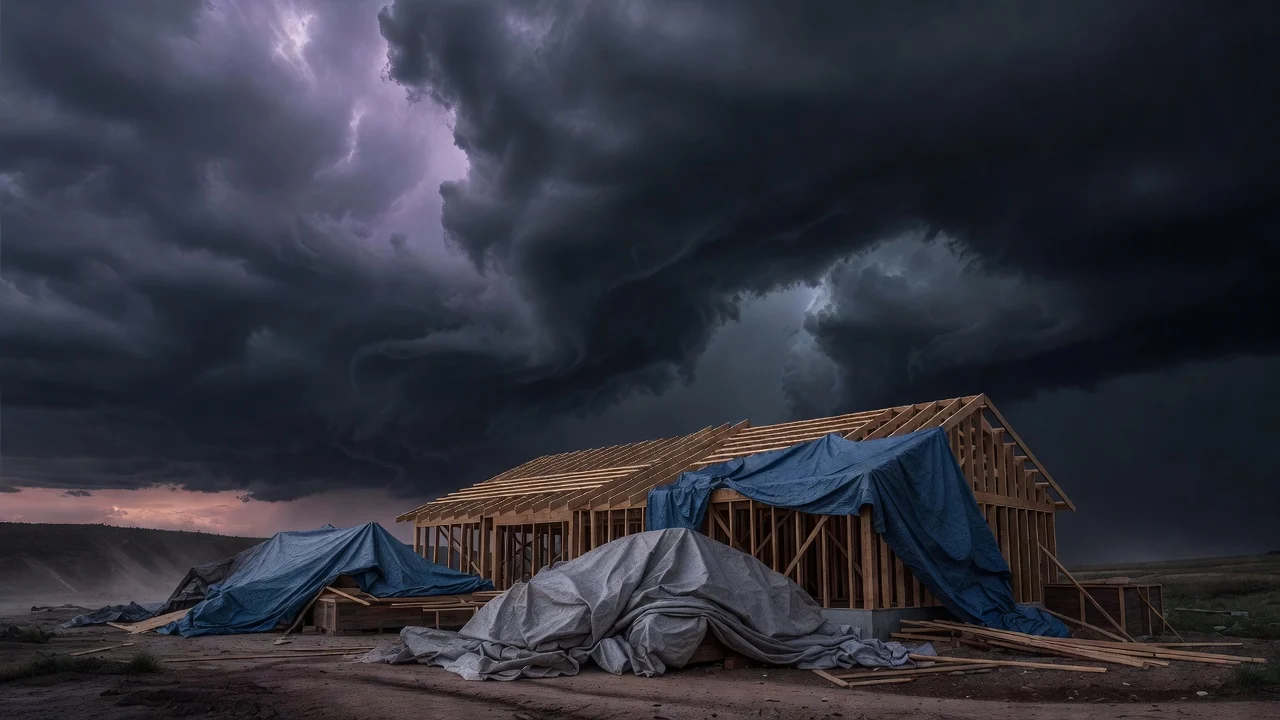
Picture trying to paint a fence in a downpour — it just doesn’t work, and shingles are the same way. Wet decking is dangerous to walk on and won’t seal properly, so crews will tarp an in-progress roof and wait out the rain rather than gamble on a poor install. Southeast Michigan’s storm season, including spring and summer hail and wind events, is a common cause of insurance-related roof claims in Washtenaw County, and storm-damaged roofs sometimes need an extra day just to assess and document everything for your insurance company. If you’re noticing shingle damage after a rough storm and aren’t sure whether it’s serious, our piece on warning signs your roof is trying to tell you something can help you figure out what you’re looking at.
Other delays are smaller and less common: a surprise patch of rotted decking that needs extra wood, a material back order, or a scheduling shuffle if a neighboring job runs long. None of these should turn a three-day job into a three-week job. If a contractor’s timeline estimate feels wildly vague, that’s usually a sign to ask more questions before signing anything.
After the Roof Is On: Cleanup, Inspection, and Warranty Paperwork
Once the last shingle is nailed down, the job isn’t quite finished. A final cleanup, a city inspection, and your warranty paperwork all come next, usually wrapping up within a few days of installation.
Cleanup should mean your yard looks like nobody was ever there — no stray nails, no shingle scraps, no debris tucked behind the bushes. A magnetic nail sweep is standard practice, not an upsell. In Saline, your roof replacement needs a final building inspection to close out the permit, and you can track that status through Washtenaw County Building Permit and Inspection Records. Michigan law also requires home improvement contracts over a certain value to be in writing with specific consumer disclosures and cancellation rights, so your paperwork trail matters here too.
Last, you should walk away with warranty documents covering both materials and workmanship. Keep them somewhere safe, the way you’d keep the title to your car. If you ever want a second opinion on a contractor’s reputation before or after the job, the Better Business Bureau Business Profile Search is a solid place to check. And if you’re still weighing who to hire in the first place, that same guide to finding a roofer you can trust in Southeast Michigan is worth a read before day one even starts.
Final Thoughts on Setting Realistic Expectations
A roof replacement feels like a big deal because it is a big deal — it’s your home’s biggest shield against the weather. But the actual work is fast. Most homeowners are shocked at how quickly a crew that knows what they’re doing can turn a tired old roof into a brand-new one, often in a single weekend. Know the Roof Clock, ask your contractor for their honest range instead of a guess, and you’ll walk into installation day with zero surprises and a lot less stress.
Key Takeaways
- Most roof replacements on an average home take one to three days from tear-off to final cleanup.
- A simple 1,500-square-foot roof can often be completed in a single day by an experienced crew.
- Weather, especially rain and storms, is the most common cause of roofing project delays.
- Michigan requires roofing contractors to hold a state Residential Builder's or Maintenance & Alteration Contractor license, not just a local business license.
- Saline requires a building permit and final inspection for roof replacements, even on single-family homes.
- Homeowners do not need to stay home during installation but should remain reachable by phone.
Frequently Asked Questions
How long does a new roof last after installation?
Most asphalt shingle roofs last 20 to 30 years depending on material quality, ventilation, and climate. Southeast Michigan's freeze-thaw winters can shorten that lifespan slightly compared to milder regions, which is why proper ventilation and ice barrier installation during the original job matter so much for long-term durability.
Should I stay home during roof replacement day?
You don't have to stay home during a roof replacement. Many homeowners go to work or run errands while the crew works. It's loud, so plan around that if you work from home, have young kids napping, or have anxious pets. Just stay reachable by phone in case a quick question comes up.
How many years does it typically take before a roof needs replacing?
Most roofs need replacing somewhere between 20 and 30 years after installation, though storm damage, poor ventilation, or lower-quality materials can shorten that window considerably. Regular inspections help catch problems early so replacement happens on your schedule, not during an emergency.
How long does it take to replace roof shingles specifically, versus a full tear-off?
Replacing shingles over an existing layer can sometimes shave a few hours off the timeline compared to a full tear-off, but many codes and manufacturers recommend a complete tear-off for a longer-lasting result. A full tear-off on an average home still usually finishes within one to three days.
What is a flat roof replacement timeline compared to a sloped shingle roof?
Flat roof replacements often move at a similar pace to sloped roofs for an average home, typically one to a few days, but the materials and installation steps differ since flat roofs use membrane systems instead of shingles. Size and any needed deck repair still affect the final timeline most.
What can I do to help my roof replacement stay on schedule?
Clear the driveway and yard so crews and dumpsters have easy access, move vehicles out of the work zone, and take down wall art or shelves inside that ceiling vibrations might shake loose. A little prep the night before helps the crew start right on time the next morning.